
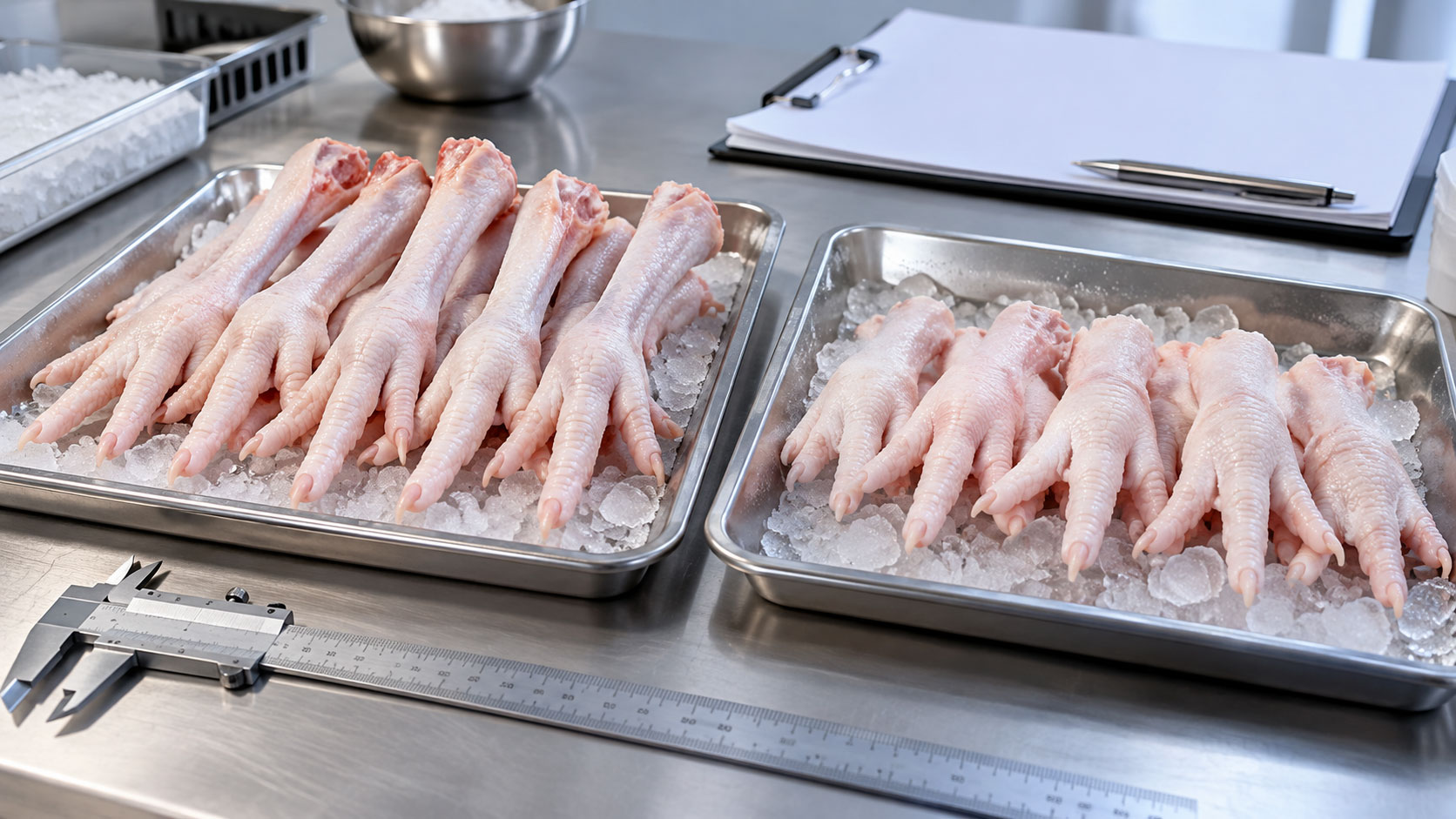
For importers, this difference matters. A quotation based on the wrong cut can lead to pricing confusion, sample rejection, or problems when the shipment arrives. That is why buyers should clearly define the required product before requesting a quote.
What Is the Difference Between Chicken Feet and Chicken Paws?
In international poultry trade, chicken feet generally refer to the lower part of the leg including the foot and, in some cases, part of the shank.
Chicken paws usually refer more specifically to the foot section after the lower leg or shank has been removed.
However, terminology is not completely standardized across all suppliers and countries. One exporter may use “chicken feet” for a product another supplier describes as “chicken paws.”
For this reason, importers should never rely on the product name alone.
The safest approach is to specify the exact cut and provide a reference image whenever possible.
Why the Product Cut Matters
The difference between chicken feet and chicken paws can affect several commercial factors, including:
- Product weight
- Piece length
- Carton count
- Processing requirements
- Market preference
- Final quotation price
A product with more of the lower leg attached will naturally have a different average weight and appearance compared with a shorter chicken paw.
This can also influence how many pieces fit into a carton and how the product is graded.
Specify the Cut Clearly
Before requesting a quotation, importers should describe the exact product required.
A useful specification may include:
Product: Frozen chicken paws
Cut: Foot section only, lower leg removed
Nails: Removed or retained
Skin: Clean and properly processed
Reference: Product photo approved by buyer
For chicken feet, buyers should state how much of the leg should remain attached.
If the cutting point is important for your market, ask the supplier to provide measurement photos before confirming the order.
Size and Weight Should Also Be Defined
Even when the product cut is correct, size can vary considerably.
Importers should define the preferred grading based on individual piece weight, length, or both.
Typical RFQ details may include:
- Minimum piece weight
- Preferred weight range
- Minimum length
- Mixed sizes allowed or not allowed
- Percentage tolerance for smaller pieces
For example, a buyer may request chicken paws weighing 35 grams and above rather than simply asking for “large chicken paws.”
This makes supplier quotations much easier to compare.
Define Acceptable Product Quality
Importers should also specify the appearance and defect tolerance expected for the shipment.
Common quality points include:
- Clean appearance
- Consistent color
- No excessive blood
- No black spots
- No severe bruising
- No broken bones
- No excessive skin damage
- No unpleasant odor
- Proper freezing condition
Terms such as Grade A chicken paws are commonly used, but the definition of Grade A may vary.
Instead of relying only on grading terminology, buyers should list the specific quality conditions they expect.
Packaging Can Differ by Market
Chicken feet and chicken paws may be packed according to different buyer requirements.
Your RFQ should include:
- Net weight per carton
- Inner bag or plastic liner
- Number of bags per carton
- Carton dimensions if required
- Labeling requirements
- Production and expiry information
- Private-label requirements
A clear packing specification helps avoid unexpected changes in the final quotation.
Always Include Photos in Your RFQ
One of the easiest ways to prevent misunderstandings is to exchange product photos before confirming the specification.
Ask the supplier for photos showing:
- The full product
- Cutting point
- Typical size
- Nail condition
- Packaging
- Frozen product before shipment
If possible, request a sample or inspection photos from the actual production batch.
What Importers Should Send Before Asking for a Price
A useful quotation request should clearly state the product, rather than simply asking:
“Please send your chicken feet price.”
A stronger RFQ would include:
Product: Frozen chicken paws
Size: 35 g+
Nails: Removed
Quality: Clean, no black spots or severe bruising
Packing: 10 kg carton
Quantity: One 40-foot reefer container
Destination: Port and country
Incoterm: CIF or FOB
This gives the exporter enough information to prepare a meaningful quotation.
Final Recommendation
The difference between chicken feet and chicken paws may seem small, but for an importer it can affect product acceptance, grading, packaging, and price.
Before placing an order, define the cut, size, quality requirements, packing method, quantity, and destination. Reference photos should also be exchanged so both buyer and supplier are working with the same product definition.
At BARAZ, we help international buyers define frozen chicken feet and chicken paws specifications before quotation, verify key product requirements, and coordinate export documentation and refrigerated shipment based on the agreed terms.