

Before requesting a quote, buyers should prepare a simple but complete specification sheet. This reduces misunderstandings, makes quotations easier to compare, and helps both sides move faster toward sampling, inspection, and shipment.
1. Start with the Exact Product Type
The first step is to define whether you need Frozen Chicken Feet or Frozen Chicken Paws.
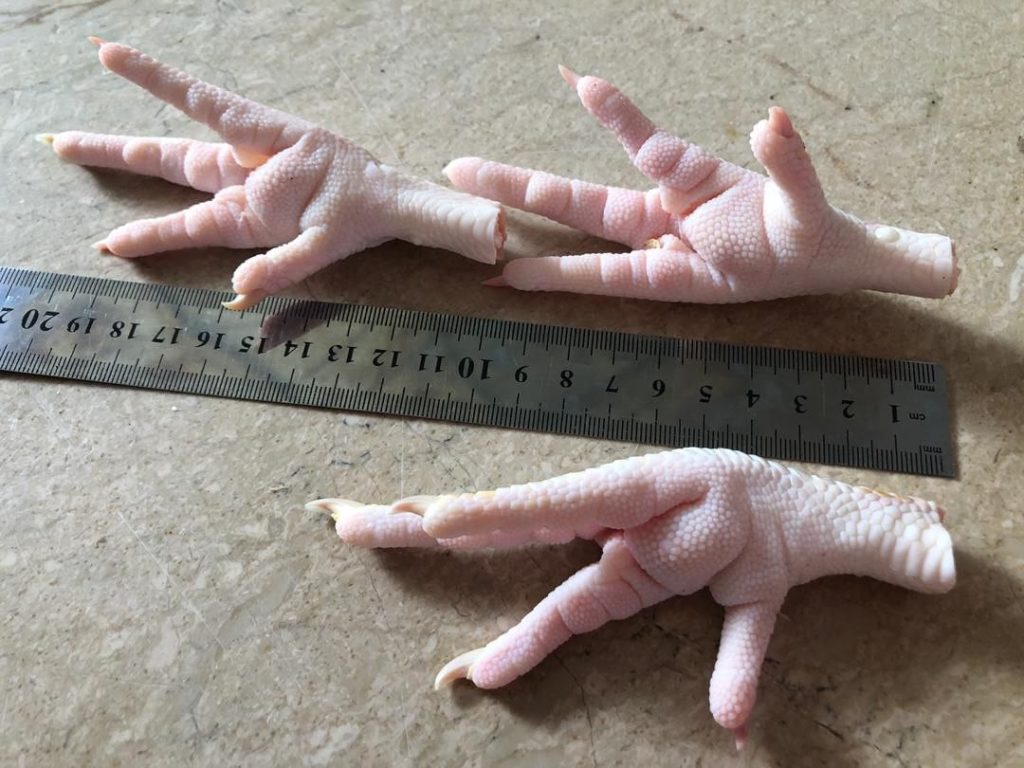
In international poultry trade, these terms may refer to different cuts depending on the market. Buyers should therefore avoid relying only on the product name. Instead, clearly describe the required cut and, when possible, provide a reference photo.
Your specification should state:
- Chicken feet or chicken paws
- Whole or trimmed product
- Skin-on or processed appearance
- Any specific cutting requirement
A photo reference can make the specification much clearer.
2. Define the Required Size and Weight
Size is one of the most important factors affecting product grading and price.
Buyers may define size by individual piece weight, length, or a supplier grading system. For example, one market may prefer larger paws while another may accept mixed sizes.
Your request can include details such as:
Piece weight: 35 g+, 40 g+, or another required range
Length: Minimum required length, if applicable
Size tolerance: Whether mixed sizes are acceptable
If you are unsure about the available grading, ask the supplier to provide the current size options before finalizing your requirement.
3. Clarify Quality Requirements
A good chicken feet specification should also explain the acceptable appearance and quality level.
Typical requirements may include:
- Clean and properly processed
- No visible blood stains
- No excessive bruising
- No black spots or burns
- No broken bones
- No unpleasant odor
- Nails removed or retained according to buyer requirement
- Consistent color and appearance
Instead of using general terms such as “Grade A,” it is better to describe the actual defects that are acceptable or unacceptable.
This is especially important because grading definitions may vary between suppliers and destination markets.
4. Specify Freezing and Storage Conditions
Frozen poultry products require controlled cold-chain handling.
The specification should normally mention whether the product is individually quick frozen (IQF), block frozen, or packed according to another freezing method.
Buyers should also confirm the required storage and shipment temperature.
For international frozen shipments, maintaining temperature consistency during storage, container loading, and transportation is essential for preserving product quality.
5. Define Packaging Clearly
Packaging can significantly affect the final quotation.
Your RFQ should specify:
- Net weight per carton
- Inner plastic bag or liner
- Number of bags per carton
- Carton type
- Required labels or markings
- Private-label requirements, if any
For example, a buyer may request:
10 kg net weight per carton, food-grade inner liner, export carton suitable for refrigerated container shipment.
The more precise the packing requirement, the more accurate the quotation will be.
6. Include Destination and Commercial Terms
A complete quotation request should not focus only on the product.
The supplier also needs to know the destination and requested delivery basis.
Include:
- Destination country
- Destination port
- Estimated quantity
- Trial order or regular monthly volume
- Incoterm such as FOB or CIF
- Required shipping documents
For a CIF quotation, the exact destination port is particularly important because freight costs can change significantly between routes.
Use a Clear RFQ to Get a Comparable Quote
A well-defined chicken feet specification helps suppliers provide a quotation based on the same product standard you actually intend to purchase.
Before sending your RFQ, define the product type, size, acceptable quality, packaging, quantity, destination, and delivery terms. If certain points are still undecided, ask the supplier to present the available options rather than leaving the requirement unclear.
At BARAZ, we work with international buyers to match chicken feet and chicken paws requirements with export-ready supply, verify key specification points before shipment, and coordinate documentation and refrigerated delivery according to the agreed commercial terms.